
Search behaviour is rapidly changing, and people are no longer scrolling through first page results; instead, they ask questions directly to AI tools like Google Gemini, Perplexity, ChatGPT and Copilot to receive instant answers.
These AI search engines summarise information from different sources into a single, clear response to users.
This changes how traditional SEO works, and it is no longer the only strategy to focus on to attract customers.
If your brand is not cited by LLM platforms, you’re missing out on a number of potential customers to your competitors.
People are shifting toward AI search Engine Optimisation (AI SEO), which is also known as Generative Engine Optimisation (GEO).
Instead of ranking a page on Google, AI SEO focuses on brand visibility, i.e., making your brand visible and being cited by AI-generated answers.
For marketers, bloggers and small businesses, this is an opportunity to get mentioned and sourced by AI search engines.
And it is time to understand how to position your brand for an AI tool to trust your website and rely on when generating answers.
In this guide, you will learn:
- What is AI Search Engine Optimisation?
- How AI search engines discover and select sources
- How to improve your brand visibility in AI search engines
- The strategies to help your content get cited and sourced in AI-generated answers.
After going through this article, you’ll understand how AI SEO works and the simple steps to position your brand to stay visible in the era of AI search.
What Is AI Search Engine Optimisation (AI SEO)?
AI Search Engine Optimisation (AI SEO) is a way of optimising your content and website for AI search engines to understand, discover and cite your brand when generating answers for users.
In traditional SEO, the goal is to rank higher on Google results, but AI SEO instead focus on getting your website as a source when generating responses.
Many users are now turning to AI tools such as Google Gemini and ChatGPT when searching for information.
These platforms analyse large amounts of information and summarise answers rather than displaying a list of links.
For example, let’s say someone asks:
What are the best SEO tools in 2026?
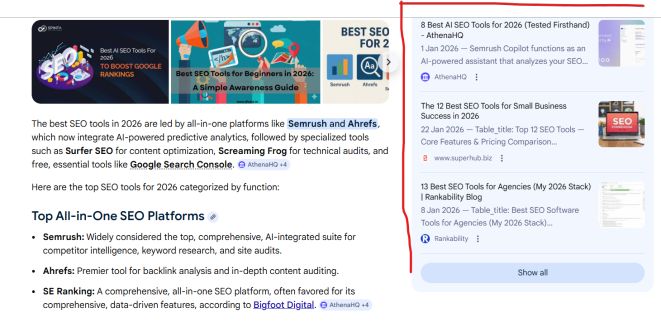
AI platform will search information from trusted websites, analyse the content, and generate a response from the most relevant and authoritative sources.
If your web page is optimised for AI search, your brand can become one of the sources these LLM platforms depend on.
Let’s take a look at the difference between AI SEO and traditional SEO
AI SEO vs Traditional SEO: What Is the Difference
Both share the same goal by helping people find information, but work differently.
Difference Between AI SEO and Traditional SEO
| Traditional SEO | AI Search Engine Optimization |
| Ranking webpages on search engines | Getting cited in AI-generated answers |
| Relies on keywords and backlinks | Based on authority, context, and structured information |
| Users click links to visit sites | AI Search Engine Optimisation |
| Success depends on rankings and traffic | Success depends mentions and citations |
While traditional SEO is still crucial to businesses, AI search is changing the game.
Brands that publishes well structure and informative content are more likely to be cited and mentioned by AI platforms.
What Is Generative Engine Optimisation (GEO)?
When discussing AI search engines, you may also need to understand what generative engine optimisation is and how it is crucial to your business.
Generative Engine Optimisation is a process of optimising content for AI engines that generate answers instead of displaying search results.
ChatGPT, Gemini and Perplexity are generative engines that analyse multiple sources and generate responses to users’ queries.
The main goal of GEO is to ensure:
Your brand is recognised as a trusted source of information and has become a reference point in AI-generated responses.
Both traditional SEO and GEO can improve your brand visibility by getting mentioned and cited in AI-generated answers, not only depending on search results.
Understand How AI Search Engines Discover Content
Now, let me explain how AI search engines discover content to cite as a source, so that you will know how to improve your brand visibility.
AI tools can’t randomly generate answers, so they rely on data from websites, search engines, and other trusted sources for their response.
When a user asks a question, AI search engines will analyse information available and evaluate trustworthy sources to generate a clear answer based on the most relevant content.
You need to structure your content in such a way that makes it easy for AI tools to find and reference your brand as a source.
Crawling and Indexing Websites
AI search engines rely on crawled and indexed web content just like Google.
Google and Bing crawl websites to discover new pages and store them in their indexes. AI systems use Google and Bing indexed data as part of their knowledge sources when generating answers.
So, if your website:
- Is indexed by search engines
- Contains high-quality and up-to-date content
- Is structured clearly with proper headings and sections
AI system to discover it and analyse your information.
In other words:
Traditional SEO still plays a crucial role in AI search visibility.
What Are The Trusted Sources AI Systems Prefer?
AI tools prioritise information from authoritative and credible sources, and check some factors before referencing a website in their response.
The types of sources AI tools often prefer are:
- Authority websites with domain credibility
- Expert blogs and educational resources
- Clear content structure with detailed explanations
- Web pages that include research, data or statistics,
- Content regularly cited across the web
If you can create content that is well-researched, clear and helpful, it has a higher chance of being picked by AI tools when generating answers.
Why Some Brands Appear in AI Answers
Some brands appear in AI-generated answers because they have built strong authority and content credibility wins.
LLMs prefer to reference brands that:
- Publish quality content that provides value
- Have the brand cited or mentioned across the web
- Create clear and well-structured pages
- Cover topics with helpful insights and data
For example, if a website publishes expert-level guides about digital marketing or social media marketing, AI search engines will likely recognise it as a reliable source.
As a content creator and business owner, focus more on building authority through valuable content and clear, structured pages to improve your brand visibility in AI search platforms.
10 Strategies to Boost Brand Visibility in AI Search Engines
If you want your brand to be visible in AI generative answers, you need to go beyond traditional SEO.
AI search engines prioritise clear and well-structured information when generating a response to cite a brand as a source
That is why platforms like ChatGPT, Google Gemini, and Copilot analyse content across the web to determine which sources offer the most helpful and trustworthy information.
Here are some simple strategies you can apply today to improve your brand visibility in AI search engines.
Create High Quality Content
Since AI tools prioritise expert-level content that answers user questions.
Avoid creating short or generic articles, and focus more on publishing:
- A complete step-by-step tutorial
- An In-depth guide with insights
- Content supported by data and examples
If your content is more helpful and informative, AI systems are likely to recognise it as a reliable source.
Optimise Content with Entities and Context
AI search systems heavily rely on entities to recognise the topics, brand, people and concepts to understand the content.
When you’re creating content, naturally mention relevant tools, concerts, brand to flow with it.Let’s say, you’re writing content about AI search optimisation, you may want to reference platforms like Gemini, ChatGPT, etc
It helps AI search engines to understand the context of your content and how it relates to other topics on the web
Use Clear and Structured Content
When the content is well-structured, it is easy for AI to analyse and summarise it
You can structure your content using this format.
- H1, H2, and H3 headings
- Bullet points
- Numbered lists
- Tables for comparisons
- Short paragraphs
It allows AI tools to extract key information from your page Always clearly format your content to align with what AI search engines prefer.
Publish Data-Driven Content
To make your content stand out, include research, insights, statistics, original data and factual information
- Consider publishing:
- case studies
- original research
- industry statistics
- Reports with surveys
Content with insights and data wins, and is likely to be cited or mentioned as a reliable source in AI-generated answers.
Build Strong Brand Authority
Like traditional SEO, authority plays a crucial role in AI search visibility.
AI search engines like to reference brands that are more recognised and mentioned across the web.
To build authority, you can do the following:
- Submit guest posts on reputable sites
- Podcasts interviews
- Get backlinks from reputable sources
- Get mentioned in publications
Make your brand more referenced online, and position it as an authority to make AI systems recognise it as a trusted source.
Answer Questions People Ask AI
Users use AI tools by asking direct questions.
For example:
- “What is the best email marketing software?”
- “How do I start a dropshipping business?”
- “What are the best keyword research tools?”
Write content that answers these types of questions directly. When you include clear questions and answers in your content, it helps AI tools to extract the information.
Create Comparison Tables
A table makes it easy for an AI search engine to frequently pull information because it is clearly structured.
Instead of making your lists in a paragraph, you can use a table to compare, let’s say
- features
- pricing
- pros and cons
- Benefits
- etc
Using a comparison table makes your content easier for AI tools to summarise and cite.
Use Internal Linking
By interlinking your content help the AI system to understand your website topics and how they relate.
For example, if you write about AI SEO tools, you could link to related topics such as:
- SEO strategies
- content marketing
- AI search engines
- keyword research tools
Linking to related content creates topic clusters that can strengthen your website’s authority.
Optimise for Featured Snippets
AI search engines like featured snippets, and they use it mostly when generating responses.
It is a short answer box that appears at the top of search results.
And to increase your chances of being cited, include:
- short definition sections in your post
- Short paragraphs with a clear answer
Build Brand Mentions Across the Web
AI search engines analyse information across the internet, not just your website.
Any brand that gets mentioned frequently on many platforms has more chances of gaining credibility.
To increase your brand mention, be active on:
- forums and communities
- social media platforms
- podcasts and interviews
This will help your brand to appear on relevant discussions online, and create a chance for AI system to recognise and reference it when generating answers.
Now, you have the strategies that can help position your brand as a trusted source of information to make AI tools reference your content when generating answers to user queries.
How to Structure Content So AI Tools Cite Your Website
Your content will not appear in AI-generated answers if it is poorly structured, no matter how quality it is.
Content that is organised clearly is easier for LLMs platforms to understand and reference.
Tools like ChatGPT, Microsoft Copilot, Perplexity AI, and Gemini often extract information from pages that present ideas in a logical and well-structured format.
Websites with proper content structuring are more recognised, summarised, and cited by these tools.
Use Clear and Descriptive Headings
Headings not only help AI tools to understand how your content is organised, but also help readers.
Here is the heading hierarchy:
- H1 for the main topic of the content
- H2 for content sections
- H3 for subtopics
Implementing Schema Markup (FAQ)
Schema markup is the summary notes for AI.It provides a structured roadmap that tells AI exactly what your data is all about.
FAQ Schema: Feeds AI answer boxes and AI Retrieval actions.
Organisation Schema: Defines your brand and social profiles to help AI verify you as a trusted entity.
SameAs Property: Link your website to your high-authority profiles, such as Quora and LinkedIn to bridge the gap between different data points.
Improving “Citable” Formatting:
Use Lists, Tables, and Summaries in your content.
AI love structured data because it is easy to extract.
Use Bullet Points: For lists of steps or features.
Comparison Tables: If you’re comparing tools like Shopify vs. Clickfunnels, a table is the most likely element to be extracted into a generative answer or summary.
TL;DR Summaries: Play a Key Role
Adding a takeaway box at the top of long posts helps the AI model to identify and extract the most important facts about the content.
Tools For AI Search Engine Optimisation
Having the right tools can help you optimise your content for AI search engines, and they help you research keywords, analyse competitors, structure your content and improve your chances for AI to cite your brand
Some of the best tools for AI Search Engine Optimisation (AI SEO) are:
Keyword Research Tools
SEMrush tool– offers keyword research, competitor analysis, AI search and topic suggestions.
Ubersuggest – A beginner-friendly SEO and GEO tools for keyword ideas, AI prompts ideas and SEO insights.
Keysearch tool – Identify keyword opportunities, content gaps and optimisation
You can read my post on the best SEO tools for beginners in 2026 to find the best that fit your business.
AI Content Optimisation Tools
AI content optimisation tools analyse your page content and suggest improvements to improve rank in search results and become more AI-friendly.
- Surfer SEO
- Frase
- Clearscope
These tools help you structure your content and align it with what users are searching for. Check the best Generative engine optimisation tools to get more ideas.
AI Writing and Research Tools
- ChatGPT
- Perplexity AI
- Google Gemini
They can identify common questions, trending topics, and content gaps that can improve your website’s visibility.
Technical SEO Tools
Technical SEO tools are essential to optimise your website for search engines, and AI tools to crawl and understand your content.
They include:
- Google Search Console
- Screaming Frog SEO Spider
- Yoast SEO/Rank Math plugin
Using the right tools can improve your AI search optimisation strategy.
Use any of these tools to identify content opportunities, structure content properly, and ensure your website is technically optimised for AI and search engines.
You can automate most of your SEO tasks using SEO automation tools that come with advanced features.
Common Mistakes to Avoid in AI SEO
As AI search is increasing, many website owners find an easy way to optimise their content, but end up with some costly mistakes that affect their website being cited by LLM platforms.
Since LLM platforms prefer well-structured and trustworthy information. If your content fails to meet these standards, you lose to your competitors.
Below are common mistakes to avoid when optimising for AI search engines.
Writing Low-Quality Content
Avoid publishing thin, short, shallow content that doesn’t provide real value to the users.
AI systems prioritise the most helpful and informative sources.
So, articles with very little detail, generic explanations or duplicated content are less likely to be cited in AI-generated answers.
Ignoring Content Structure
You have heard it several times, AI tools love proper content structure to easily understand your page.
In your content, use clear headings, organise your sections and use bullet points or lists; it is easy for AI tools to analyse and summarise your content.
Over-Optimising Keywords in Content
Avoid keyword density and repetition in your content. Instead, focus on topic depth and answer real user questions
AI search engines focus on context and not keyword matches.
Not Building Brand Authority
Building authority helps both traditional SEO and AI SEO.
And since AI SEO rely more on trusted brands and authoritative sources, you can use one stone to kill two birds.
To build authority, focus on:
- Getting more backlinks from reputable websites
- Publishing more guest posts on high DA websites
- Getting your brand/website mentioned in industry blogs
- Building an online presence
Building a strong online presence will help people recognise your brand online to boost chance to reference it as a source.
Ignoring User Intent
User intent is very important when creating content. Make your content to address user questions.
To make your content be cited, it must:
- Answers specific questions
- Provides practical solutions
- Use data and insights to explain topics clearly
If your content aligns with user intent, it becomes valuable to readers and search engines.
You can make your website remain valuable and credible for AI search engines to reference it when you avoid the above mistakes.
The Future of AI Search And Your Brand
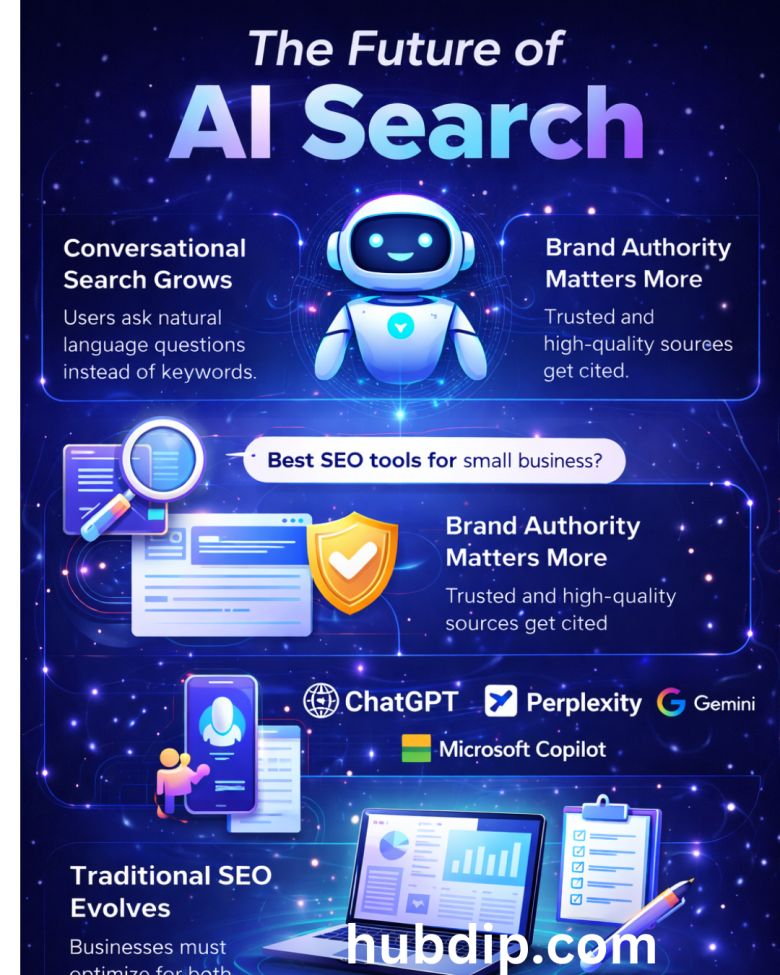
As AI search is transforming how people find information online, browsing through multiple search results is now optional. Users are moving toward AI tools to get direct answers to their questions.
ChatGPT, Google Gemini, and Microsoft Copilot deliver conversational responses that summarise information from multiple sources.
AI-driven search is now playing a major role in digital marketing and online visibility.
Conversational Search Is Becoming the New Standard
Unlike traditional search, which involves typing a keyword phrase into a search engine. AI search encourages users to ask questions.
For example, what is the best landing page platform for beginners?
Which landing page tools are affordable for beginners?
AI tools than analyze these questions and generate responses based on relevant sources.
AI Assistants May Replace Traditional Search Behaviour
Users are now depending on AI assistants to complete tasks like product research, learning new skills, getting recommendations, etc
Instead of clicking through multiple websites, users simply ask an AI search engine for suggestions and then follow its recommendations.
For example
- What are the best CRM tools to nurture leads?
- How can I boost my blog SEO as a beginner?
The AI tool provides information from trusted sources and summarises the answer.
No need to click on the website again to find the information you’re looking for.
Brand Authority Will Become Even More Important
Brand authority helps both traditional SEO and AI search engines.
This means AI tools are likely to reference brands that:
Publish quality and expert-level content, get more mentions across reputable sites and provide well-structured and reliable information
SEO and AI Optimisation Will Work Together
Traditional SEO still plays a significant role in making your brand visible in AI search engines, and both can work together as part of a search strategy.
Search engines discover and index content while AI rely on this information when generating answers.
For content creators and business owners, the best approach is to focus on:
- high-quality SEO content
- Building website authority
- Creating a website with structured and informative pages
- Create content that answers user questions
When you combine both traditional SEO strategies with AI search optimisation, you can improve your brand’s visibility and attract more customers.
Conclusion: Becoming the Resource for AI
In 2026, the brands that win are not based on backlinks but provide the most verified value.
By focusing your effort on Generative Engine Optimisation (GEO), you are preparing your business against the next decade of search evolution.
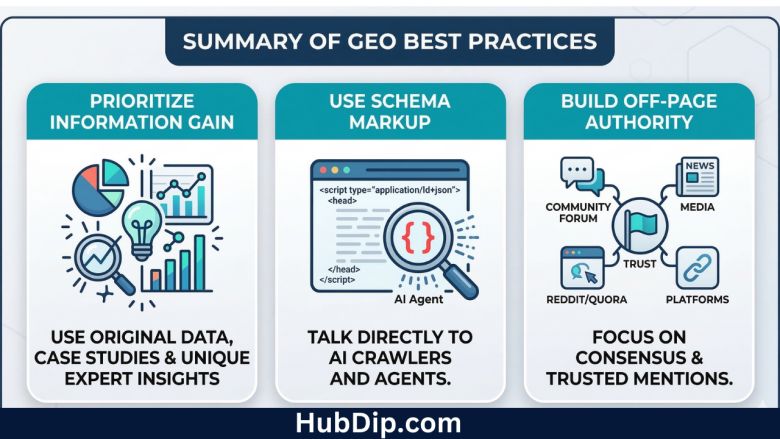
To make it work, follow these GEO best practices:
Prioritise Information Gain with original data, insights and research
Talk directly to the AI agent through Schema Markup
Build Authority Off-Page by getting mentions on high authority websites and community engagement.
Trust is now the new online currency. If the AI can trust your data, it will make your brand the answer.
Related Posts
What Is SEO in Content Writing?
